
Histamine Intolerance: Why You Might Be Reacting to Healthy Foods
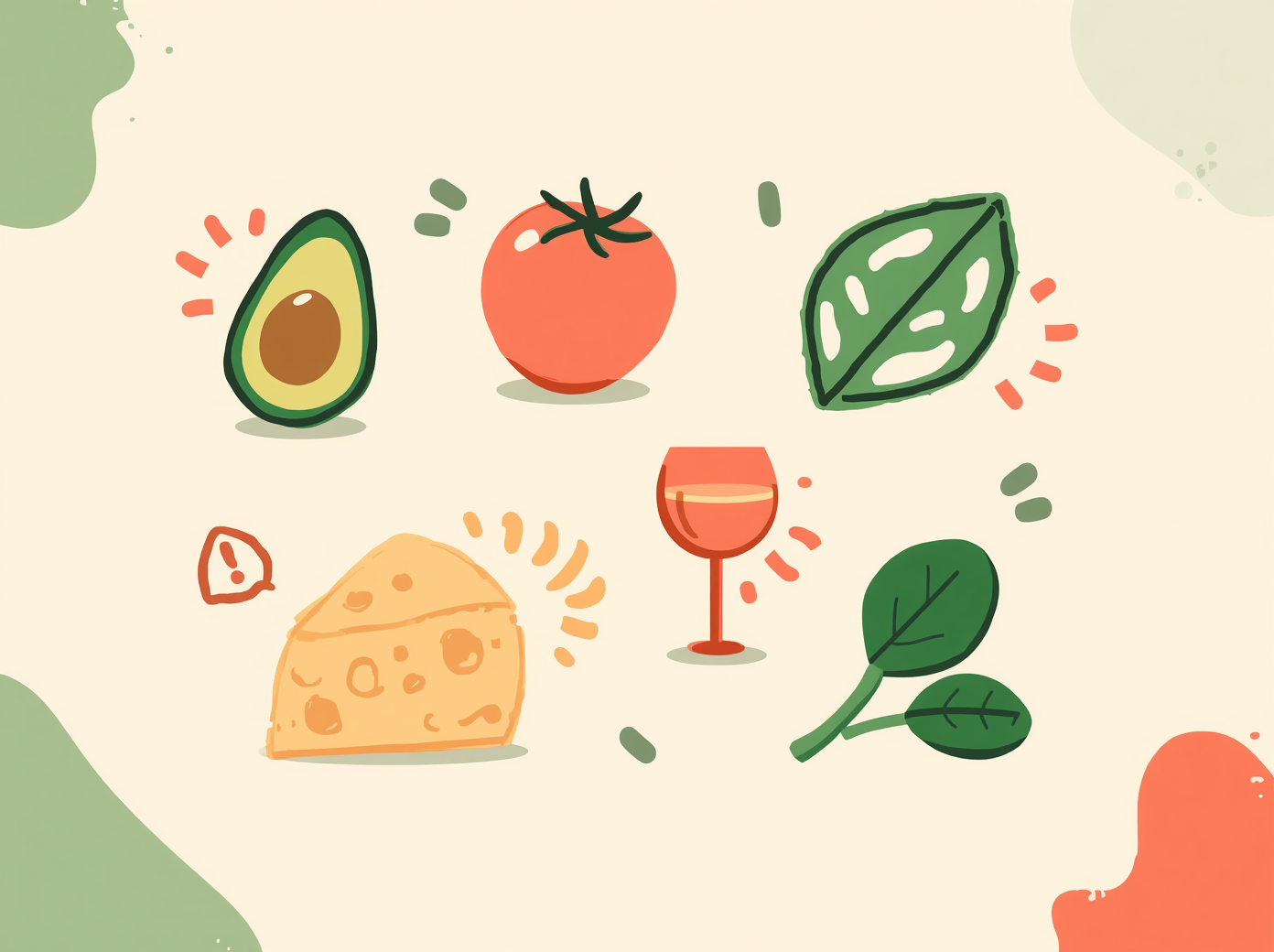
If you feel like you react to foods that are supposed to be good for you (a glass of wine, leftovers, aged cheese, even spinach or avocado) and the pattern never quite makes sense, histamine intolerance is worth understanding.
It is one of the most confusing presentations I see in clinic, partly because the symptoms are so varied and partly because so much of the information online is contradictory. This article explains what histamine intolerance actually is, why the symptoms are so scattered, how it is assessed, and, most importantly, why the answer is rarely a lifetime of restriction.
What is histamine intolerance?
Histamine is a normal and necessary molecule. Your body makes it, it plays a role in immune responses, digestion, and brain signalling, and it is also present in many foods. Under normal circumstances, you break down dietary histamine efficiently and never notice it.
Histamine intolerance describes what happens when the balance tips: when the amount of histamine coming in (and being released internally) outpaces your body's capacity to break it down. The result is a kind of overflow, and histamine starts producing symptoms throughout the body.
The single most important thing to understand is this: histamine intolerance is not a true allergy. A food allergy involves the immune system producing IgE antibodies against a specific food, and reactions are immediate and consistent. Histamine intolerance is different. It is dose-dependent and cumulative, which is exactly why it is so confusing. A food might be fine in a small amount on a good day, and cause a reaction in a larger amount on a day when your "histamine bucket" is already full.
Why the symptoms are so confusing
Because histamine acts on receptors all over the body, the symptoms can show up almost anywhere. People are often surprised that such different complaints can come from one underlying issue. Common ones include:
Headaches or migraines
Flushing, hives, itching, or skin reactions
Nasal congestion, a runny nose, or sneezing that isn't hay fever
Digestive symptoms: bloating, abdominal pain, loose stools, nausea
Heart palpitations or a racing heart
Dizziness or feeling faint
Anxiety, restlessness, or trouble sleeping
Symptoms that flare around the menstrual cycle
It is the combination of these, and the lack of an obvious pattern, that tends to be the giveaway. People frequently arrive having been told that each symptom is separate and unrelated, when in fact a single thread runs through them.
What causes histamine intolerance?
This is the part that matters most, because histamine intolerance is almost always a symptom of something else rather than a standalone condition. To find the real answer, we have to look at why the balance has tipped.
Reduced capacity to break histamine down
The main enzyme that clears histamine from food is diamine oxidase (DAO), produced largely in the gut. When DAO activity is low, dietary histamine isn't cleared efficiently. DAO can be reduced by gut conditions, certain medications, and other individual factors.
Gut health, the most common driver
This is where the trail usually leads. Conditions such as SIBO (small intestinal bacterial overgrowth), dysbiosis, and inflammation in the gut lining can all reduce DAO and raise the histamine load at the same time. Some gut bacteria actually produce histamine themselves, adding to the burden from the inside. This is why so many people with histamine symptoms also have a history of digestive issues, the two are deeply connected. (If gut testing is something you've wondered about, I've written separately about what gut microbiome testing can and can't tell you.)
Diet
A high intake of histamine-rich foods can overwhelm even a normally functioning system, and certain foods and drinks also block DAO or trigger histamine release directly.
The histamine "bucket"
The most useful way to picture all of this is as a bucket. Food, internal histamine release, gut bacteria, hormones, and stress all add to it; your DAO and other clearance pathways empty it. Symptoms appear when the bucket overflows, which is why the same food affects you differently on different days. The clinical goal is not just to put less in the bucket, but to improve how well you empty it.
Which foods are high in histamine?
Food lists circulate widely online, and they cause a lot of unnecessary fear, so a few points of context first. Histamine content is highly dependent on freshness and storage, histamine builds up as food ages, is fermented, or is left as leftovers, so how a food is handled often matters as much as what it is.
Foods commonly higher in histamine, or that prompt histamine release, include:
Aged and fermented foods, such as aged cheeses, fermented vegetables, soy sauce and fermented soy products
Cured and processed meats
Alcohol, particularly wine and beer (alcohol both contains histamine and blocks DAO)
Vinegar and pickled foods
Leftovers and fish that hasn't been very fresh
Some plant foods such as tomatoes, spinach, and eggplant
Certain fruits, including citrus and strawberries
I've deliberately kept this list illustrative rather than exhaustive, because the aim is not to remove everything on it. Reacting to the list with maximum restriction is one of the most common mistakes, and it tends to make life harder without addressing the cause.
How is histamine intolerance diagnosed?
Honestly? There is no single, reliable test that confirms it. Blood tests for DAO and histamine exist, but they are inconsistent and not considered dependable on their own. This is a source of real frustration for people who want a clear yes-or-no answer.
In practice, a careful assessment is more useful than any one test. That usually means:
A detailed history connecting the symptoms, their timing, and possible triggers
A structured symptom-and-food diary to find the actual pattern
A short, supervised trial of a lower-histamine diet to see whether symptoms improve
Investigating and addressing the underlying drivers, especially gut health
It is also important to rule out other things that can look similar, including true food allergy and mast cell activation issues, which is where working alongside medical colleagues matters.
How is it actually managed?
Here is the reframe I most want people to take away: the goal is not to follow a strict low-histamine diet forever. A very restrictive diet has its place as a short-term diagnostic and settling tool, but as a long-term strategy it is both unnecessary and counterproductive: it narrows nutrition, increases stress around food, and never addresses why the problem started.
A more sustainable approach generally looks like this:
A short low-histamine phase to reduce the load and see whether symptoms settle. This confirms that histamine is part of the picture.
Addressing the underlying drivers, particularly gut health, since this is so often where the imbalance originates.
Structured reintroduction to find your individual tolerance, rather than assuming the most restricted version of your diet is the safest one.
Supporting your body's clearance pathways, the nutrients and conditions that help histamine metabolism work properly.
There is one area I pay particular attention to, because it surprises people: probiotics are not automatically helpful here.Some probiotic strains produce histamine and can make symptoms worse, while others are neutral or supportive. Reaching for a generic probiotic is a common way that well-intentioned people accidentally feed the problem. Strain choice matters, and it should be considered carefully rather than assumed.
When to seek further help
Some symptoms always warrant prompt medical assessment rather than dietary experimentation, including any sign of a true allergic reaction such as swelling of the lips, mouth, or throat, or difficulty breathing. Histamine intolerance is also not the same as a mast cell disorder, and persistent or severe reactions deserve a proper medical work-up. If you are unsure, please speak with your GP.
A more precise way forward
If you recognise yourself in this, reacting to foods that "should" be fine, with a scattered set of symptoms that no single explanation has captured, the path forward is usually not more restriction. It is a careful, individualised investigation of what is filling your histamine bucket and why your body isn't emptying it efficiently.
That is the kind of complex, won't-fit-in-one-box presentation I work with most. If you'd like to understand what's actually driving your symptoms, you're welcome to book a consultation or get in touch with any questions first.
Sophie Thelosen is a Clinical Nutritionist registered with the Australian Traditional Medicine Society (ATMS), practising within the integrative team at Mosman Integrative Medicine alongside Dr Mark Donohoe and Dr Isobel Marr. She works with people experiencing gut issues, food and supplement sensitivities, histamine intolerance, and chronic fatigue, in person in Sydney and via telehealth across Australia.
This article is general information and is not a substitute for individualised advice. If you have ongoing or severe symptoms, please consult an appropriate health professional.